When health care research stops, the answers stop with it.

AHRQ-funded research helps answer practical questions about how health care can be safer, more effective, and more affordable. On July, 15, 2026, researchers began receiving notices that funding for AHRQ grants already underway would not continue.

This tracker documents research grants that have been canceled, the funding affected, and the patients, families, and communities the work was meant to help.


When health care research stops, the answers stop with it.

AHRQ-funded research helps answer practical questions about how health care can be safer, more effective, and more affordable. On July, 15, 2026, researchers began receiving notices that funding for AHRQ grants already underway would not continue.

This tracker documents research grants that have beencanceled, the funding affected, and the patients, families, and communities thework was meant to help.

Who Loses Out

The canceled research reaches across the health care system.
These are some of the people it was meant to help.


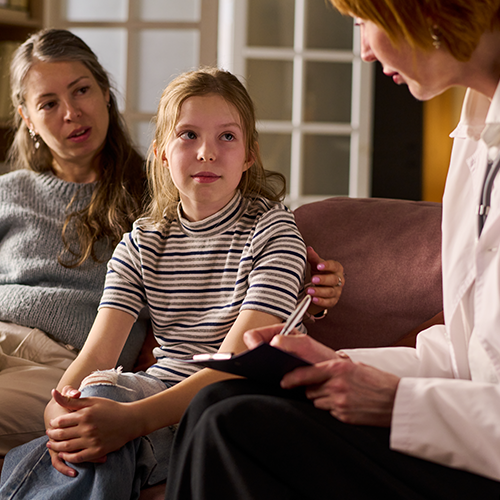
Children in foster care
Hospitalized children and their families
Children with asthma
Children with chronic conditions
Children needing mental health support
New and expecting mothers
Pregnant patients with diabetes
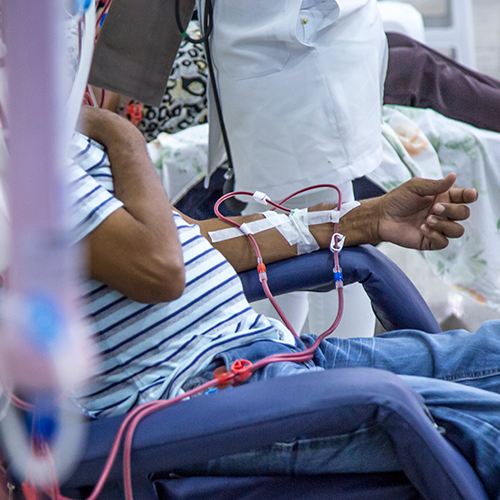
People with kidney failure
Cancer patients
People managing multiple chronic conditions
Older adults
People with disabilities
People on Medicaid and Medicare
Rural patients
Lower-income patients
People with substance use disorders
Patients at risk of misdiagnosis
Patients in emergency and urgent care
People who rely on telehealth
Survivors of sexual assault
The next generation of researchers

The priorities they named. The research they cut.

In its cancellation letters, AHRQ said it was ending these grants to redirect resources toward its stated priorities, including patient safety, antibiotic resistance, telehealth, and autism. But much of the research it canceled was doing exactly that work. The agency cut studies in the very areas it said it wanted to protect.

Preventing antibiotic resistance

a trial across 40 hospitals testing how to use antibiotics more appropriately.

Patient safety

a study built on AHRQ's own National Action Plan to Advance Patient Safety.
Telehealth

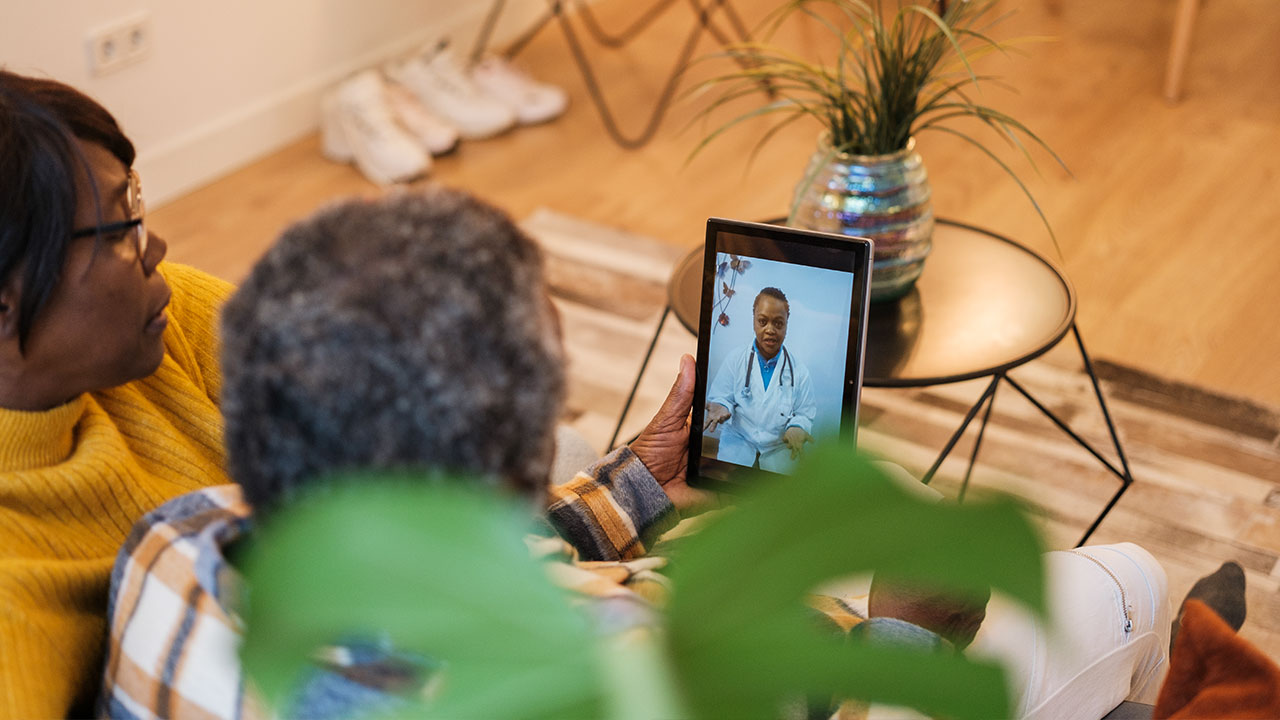
a program using telehealth to manage asthma in children whose families face a language barrier.

Digital health tools

a study giving families of hospitalized children access to their care team's notes to catch safety problems.

Artificial intelligence

a tool using AI to catch dangerous iron deficiency in pregnancy before delivery.

Autism

a study to improve early autism screening and diagnosis using digital tools.

Where the Cancellations Occurred

The canceled grants were awarded to researchers and institutions across the country.

Take Action

Report a canceled grant

If your AHRQ grant received a cancellation or non award notice, tell us. Sharing your grant number, project title, and cancellation notice can help us build a more complete public record.

For reporters

We can provide data, background, and connections to affected researchers who have agreed to speak.

Donate to support this work

Documenting canceled grants, supporting affected researchers, and making this information available to the public requires ongoing resources.

Explore the Cancelled Grants

The list below includes the canceled grants we have verified. Every grant included in the list is reflected in the totals and charts on this page. We name individual projects only when the researcher has given us permission to do so. As more researchers agree to be identified, additional projects will be added.

Showing 0 of 100
Tag
Filters
Filter One
Clear
Filter Two
Clear
Filter Three
Clear
Filter Four
Clear
Filter Five
Clear
Filter Six
Clear
Filter Seven
Clear
Filter Eight
Clear
Filter Nine
Thank you! Your submission has been received!
Oops! Something went wrong while submitting the form.
K01 HS029701
Not-For-Profit Hospital Community Benefit: Multi-Sectoral Collaboration in Local Health Planning to Improve Population Health, Equity, and Hospital Investment in the Social Determinants of Health
Nonprofit hospitals are expected to invest in the health of their surrounding communities. This early-career project studies how hospitals, local agencies, and community groups can plan together to improve population health, address social needs, and make those community investments count.
Communities served by nonprofit hospitals
Health equity
K01
Early-career award
TULANE UNIVERSITY OF LOUISIANA
Louisiana
R01 HS029340-03
The role of telehealth in improving access to and costs of unscheduled care among lower-income individuals
For people with lower incomes, getting urgent or unscheduled care can be difficult and expensive. This study examines whether telehealth improves access to that care and lowers costs, so more people can get help when they need it.
Lower-income patients who need unscheduled care
Telehealth and digital tools
R01
Research project
NORTHWESTERN UNIVERSITY
Illinois
T32 HS026128
Stanford Health Services Research Training Program
This program trains PhD students and postdoctoral researchers to study how health care is delivered and how it can be improved. Graduates become the researchers and experts who help make care safer, more affordable, and more effective.
Early-career researchers, and the patients their future work will reach
Training and workforce
T32
Training program
STANFORD UNIVERSITY
California
T32 HS013852
UAB Health Services & Outcomes Research Training Program
This program trains researchers in health services and outcomes research, the field that studies how to make care safer, more affordable, and more effective. Its trainees go on to improve health-care delivery through research and policy.
Early-career researchers, and the patients their future work will reach
Training and workforce
T32
Training program
UNIVERSITY OF ALABAMA AT BIRMINGHAM
Alabama
R01HS030098
Bedside Notes: A multicenter trial to improve family clinical note access and outcomes for hospitalized children
When families can read the same clinical notes the care team writes, they can be better partners in a child's hospital care. This multi-site trial tests whether giving families access to bedside notes improves communication, safety, and outcomes for hospitalized children.
Hospitalized children and their families
Maternal and child health
R01
Research project
UNIVERSITY OF WISCONSIN-MADISON
Wisconsin
K01 HS028732-04
The effect of rurality and the COVID-19 pandemic on telemedicine and preventive healthcare use
The pandemic changed how people used telemedicine, and access was not the same everywhere. This early-career project studies how living in a rural area and the COVID-19 pandemic affected patients' use of telehealth and preventive care, to help make virtual care work better for communities that are harder to reach.
Rural patients who rely on telehealth for preventive care
Telehealth and digital tools
K01
Early-career award
OCHIN, INC.
Oregon
P30 HS029759-03
Learning Health System Scientist Training And Research in New Jersey (LHS STAR NJ)
This center trains scientists in New Jersey to work inside health systems and study care as it is delivered, so problems get identified and solved quickly. The goal is a health system that learns from itself and improves care for the people it serves.
Researchers embedded in health systems, and the patients they serve
Learning health systems
P30
Research center
RUTGERS BIOMEDICAL AND HEALTH SCIENCES
New Jersey
P30 HS029767-03
Realizing Accelerated Progress, Investigation, Implementation, and Dissemination in Learning Health Systems (RAPID-LHS) Center
This center helps health systems speed up the cycle of studying a care problem, testing a fix, and spreading what works. It also trains the researchers who carry out that work, so improvements reach patients faster.
Researchers embedded in health systems, and the patients they serve
Learning health systems
P30
Research center
VANDERBILT UNIVERSITY MEDICAL CENTER
Tennessee
T32 HS026122-08
Learning Health System training program: PROgRESS-- Patient/ pRactice Outcomes and Research in Effectiveness and Systems Science
This program trains scientists to work inside learning health systems, studying real-world care and turning findings into practical improvements. Several early-career faculty and postdoctoral trainees depend on it, including some whose research covers areas AHRQ has named as priorities.
Early-career researchers, and the patients their future work will reach
Training and workforce
T32
Training program
VANDERBILT UNIVERSITY MEDICAL CENTER
Tennessee
T32 HS000046-34
UCLA/RAND HEALTH SERVICES RESEARCH TRAINING PROGRAM
For more than 30 years this program has trained PhD students and postdoctoral researchers to study how to make health care safer, more affordable, and more effective. Trainees go on to become researchers and policy experts who help improve health-care delivery across the country.
Early-career researchers, and the patients their future work will reach
Training and workforce
T32
Training program
UNIVERSITY OF CALIFORNIA LOS ANGELES
California
U18 HS029307-04
Consumer Assessment of Healthcare Providers and Systems (CAHPS) VI
This grant supports the national surveys, known as CAHPS, that hospitals and health systems use to measure patients' experiences of care. The work maintains and improves these standardized tools so the country can compare care fairly and push it to get better.
Patients whose experiences shape how care quality is measured
Patient safety
U18
Research center
YALE UNIVERSITY
Connecticut
T32 HS017589-18
Yale Training Program in Health Services Research
This program trains the next generation of health services researchers who study how care is delivered and how to make it safer, more effective, and more affordable. Its graduates go on to shape health policy and improve patient care across the country.
Early-career researchers, and the patients their future work will reach
Training and workforce
T32
Training program
YALE UNIVERSITY
Connecticut
R03 HS030016-02
Assessing the Impact of Health System Ownership on Fulfilling the Vision of High-Quality Primary Care and Whole Health
Across the country, more independent primary-care practices are being bought by large health systems. This study examines whether those ownership changes affect the quality of care, how easily patients can get appointments, and whether practices keep providing the comprehensive, relationship-based primary care patients need.
Patients who rely on primary care
Primary care
R03
Research project
VIRGINIA COMMONWEALTH UNIVERSITY
Virginia
R01 HS029868
Whole Person Navigation: Pragmatic randomized trial of combined social resource and care system navigation for adults with multiple chronic conditions
People with multiple chronic conditions often struggle to navigate both the health-care system and the community services they need. This clinical trial tests whether trained navigators who help patients coordinate care and connect to resources like transportation, food, or housing can improve health and reduce unnecessary hospital visits.
Adults living with several chronic illnesses at once
Chronic conditions
R01
Research project
KAISER FOUNDATION RESEARCH INSTITUTE
California
K08 HS028684-04
Impact of the ESRD Treatment Choices Model on Home Dialysis Uptake and Disparities
Home dialysis can offer people with kidney failure more independence and better quality of life, but not everyone has equal access to it. This early-career project studies how a national payment model affects whether patients start home dialysis and whether gaps between groups of patients grow or shrink.
People with kidney failure, especially those facing disparities in care
Health equity
K08
Early-career award
Weill Medical College of Cornell University
New York
K08 HS029695-03
Patient-centered decision making to improve opioid use disorder treatment
Decisions about opioid use disorder treatment work best when patients are active partners in the choices. This early-career project develops better ways to support shared decision-making so treatment fits each person's needs and more people stay in care.
People being treated for opioid use disorder
Substance use
K08
Early-career award
VANDERBILT UNIVERSITY MEDICAL CENTER
Tennessee
T32 HS022241-13
UC Berkeley-UCSF Health Services Research Training Program
This long-running program trains PhD students and postdoctoral researchers in health services research, the field that studies how to make care safer, more affordable, and more effective. Its trainees go on to become the researchers and policy experts who improve health-care delivery nationwide.
Early-career researchers, and the patients their future work will reach
Training and workforce
T32
Training program
UNIVERSITY OF CALIFORNIA BERKELEY
California
R01 HS029482-03
Reducing Overuse of Antibiotics at Discharge: The ROAD Home Trial
Many patients leave the hospital with antibiotic prescriptions that are longer or stronger than needed, raising the risk of side effects and antibiotic resistance. This clinical trial tests strategies to help hospitals prescribe antibiotics more appropriately at discharge, protecting patients while helping preserve the effectiveness of these drugs.
Patients discharged from the hospital on antibiotics
Patient safety
R01
Research project
UNIVERSITY OF UTAH
Utah
R01 HS029453-03
Integrating Medicare and Medicaid coverage in managed care: effects on quality, utilization, and disparities
Millions of older adults and people with disabilities are covered by both Medicare and Medicaid, but navigating two separate programs can be confusing. This study examines whether combining those benefits into a single managed-care plan leads to better care, lower costs, and fewer disparities between groups of patients.
Older adults and people with disabilities on both Medicare and Medicaid
Medicaid and Medicare
R01
Research project
UNIVERSITY OF PENNSYLVANIA
Pennsylvania
R18 HS029773-03
Supporting Unhealthy Substance use care Through a whole person Approach and user centered INtegration into primary care (SUSTAIN)
Many people with unhealthy alcohol or drug use first seek help in primary care, but those clinics often are not set up to address substance use well. This project tests ways to build substance-use treatment into routine primary care so it is easier for both patients and providers, treating substance use as part of a person's overall health.
People with alcohol or drug use who seek care in primary care clinics
Substance use
R18
Research project
UNIVERSITY OF WASHINGTON
Washington
T32 HS029581-03
The University of Chicago and Northwestern University Postdoctoral Health Services Research Program
This program trains postdoctoral researchers to study how health care is delivered and how to make it safer, more effective, and more affordable. Graduates go on to lead the research that improves care and informs health policy across the country.
Early-career researchers, and the patients their future work will reach
Training and workforce
T32
Training program
NORTHWESTERN UNIVERSITY
Illinois
K08 HS028817-04
The cost of illness: The impact of COVID-19 on patient financial outcomes
COVID-19 affected people's finances as well as their health. This research examines how getting COVID changed patients' medical bills, debt, employment, and overall financial security. The findings could help policymakers understand the hidden economic costs of serious illness and find ways to protect families from financial hardship.
Patients facing medical debt after serious illness
Health care costs and access
K08
Early-career award
UNIVERSITY OF MICHIGAN AT ANN ARBOR
Michigan
R01 HS030246-02
ARISING: AddRessing Institutional Sexual harassment to Improve physiciaN well-beinG
This study tests ways hospitals can better prevent and respond to workplace sexual harassment of physicians. Researchers are examining how policies, reporting systems, and workplace culture affect clinician well-being, burnout, and retention, with the goal of creating safer, healthier workplaces for the people who care for patients.
Physicians and other clinicians
Patient safety
R01
Research project
UNIVERSITY OF MICHIGAN AT ANN ARBOR
Michigan
P30 HS029744-03
Learning Health System Embedded Scientist Training and Research (LHS E-STaR) of theNorth (LEaRN)
This program trains researchers to work directly inside hospitals and health systems so they can help solve real-world care problems. Instead of studying health care from the outside, these scientists partner with doctors, nurses, and health-system leaders to spot what is working, what is not, and how to improve care. The goal is to make health systems better at continuously learning and improving.
Future health-system researchers, and the patients they serve
Learning health systems
P30
Research center
UNIVERSITY OF MINNESOTA
Minnesota

Reporting on the Cancellations

Journalists have reported on the canceled grants and interviewed affected researchers using data from this tracker.

Health department abruptly cancels health research grants worth millions
"No one knows what's going on, and no one is answering."
Aaron Carroll
AcademyHealth
Trump administration ends dozens of grants for studying patient care
"If I were Congress, I'd be livid."
Aaron Carroll
AcademyHealth
An Agency That Supports Health-Care Improvement Cuts Off Grant Funding
"Everything Americans hate about health care is what this research focuses on"
Aaron Carroll
AcademyHealth
HHS research agency ends funding for dozens of health studies
"We're losing a generation of very innovative scientists"
Tim Beebe
University of Minnesota'
Trump Administration Cuts Off Health Care Research Grants Without Warning
"People were caught totally off guard and are absolutely in a panic"
Aaron Carroll
AcademyHealth

About This Tracker

AcademyHealth is the professional home for health services research, the field that studies how health care is delivered and how it can be improved. We compiled this tracker using cancellation and non award notices shared directly by affected researchers, along with federal grant data.

Already invested refers to funding awarded and spent during the project periods before cancellation.

Remaining committed funding lost refers to funding committed to the grants for the remainder of their project periods but no longer available.

Total value of affected awards is the combined value of the funding already invested and the remaining committed funding.

Figures are updated as additional grants are verified and may change as new information becomes available.

To report a canceled grant or correction, contact advocacy@academyhealth.org.